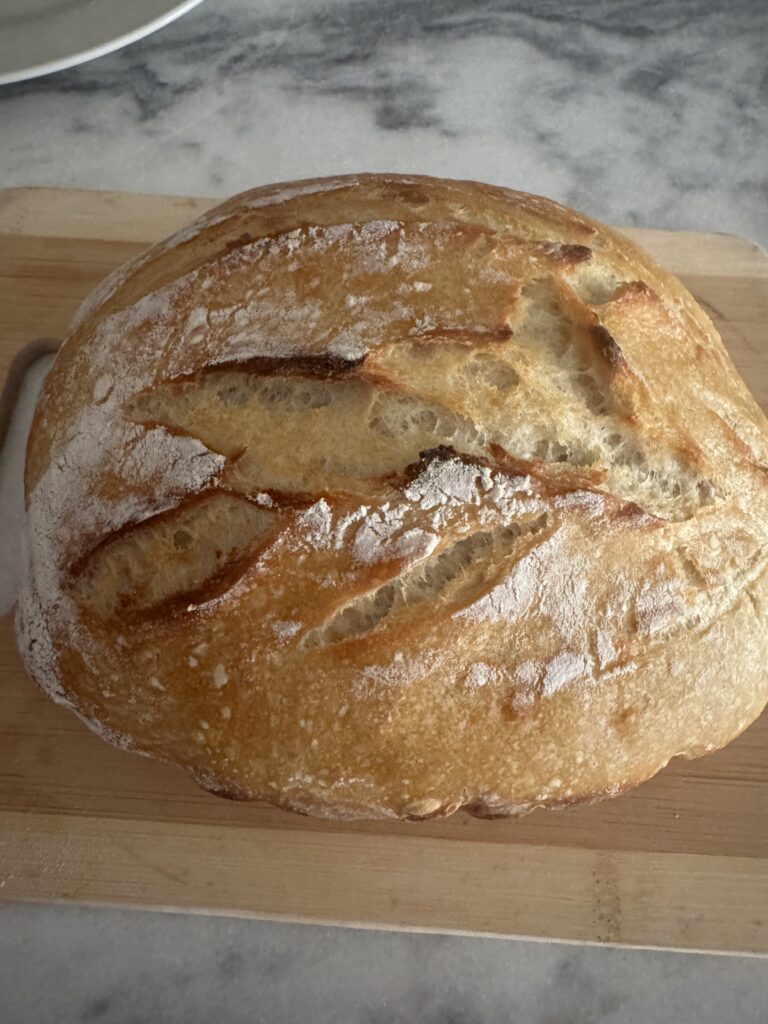
Sourdough is all the rage these days. And to be honest, I’ve never tried sourdough until I’ve seen people talk about it on the Internet. So one day I decided to buy my first loaf from the supermarket and I was hooked. From having with butter, dipping a toasted slice in stews and soups and my all-time favorite way, is to enjoy a slice of sourdough with smashed avocado, fried egg, and Everything But The Bagel seasoning sprinkled on top.
After a couple of months of buying sourdough weekly, I realized I was spending way more money than I ever had expected to spend on bread. And then that’s when I decided I’d try to bake my own. Now let me say right here that I’m not a baker, and every time I see a recipe with the word “yeast” in it, I ran for the hills. For some reason, yeast overwhelmed me, confused me, and I wanted nothing to do with it. So when I learned that in order to make a loaf of sourdough bread, you had to have something called a sourdough starter, I had no idea what I was getting myself into. Apparently It is this live little creature that you keep on your counter, that you have to feed daily, clean and tend to. It gets cranky if you don’t give it the attention it demands. It gets “hungry” or should I say “hangry”, and you’ll know this because it will get liquid on top and a distinct hue and acidy scent. It is very moody because if the environment in your home isn’t just right, it won’t behave. And you can only use it when “It’s” good and ready. And if you go on vacation, you have to make sure that there is someone who will take care of it for you. So basically you have a toddler, who is going through the terrible twos, sitting on your counter.
So if a packet of yeast intimidated me, why in the world would I think creating a sourdough starter would be right for me? 
Here is the scientific definition of sourdough starter:
A sourdough starter is basically a live culture of wild yeast and lactic acid bacteria that you grow by mixing flour and water and just letting it sit out, feeding it regularly. The wild yeast in the environment and on the flour itself starts fermenting, producing carbon dioxide, which is what makes bread rise, and the bacteria produce lactic and acetic acid, which gives sourdough that distinctive tangy flavor.
Unlike commercial yeast, which is one single strain you buy in a packet, a starter is this whole little ecosystem, and it takes about a week or two of daily feeding to get it active and bubbly enough to actually bake with.
Did you understand that? Me neither. But the gist of all that mumble jumble, is you stir four and water in a jar and watch it grow.
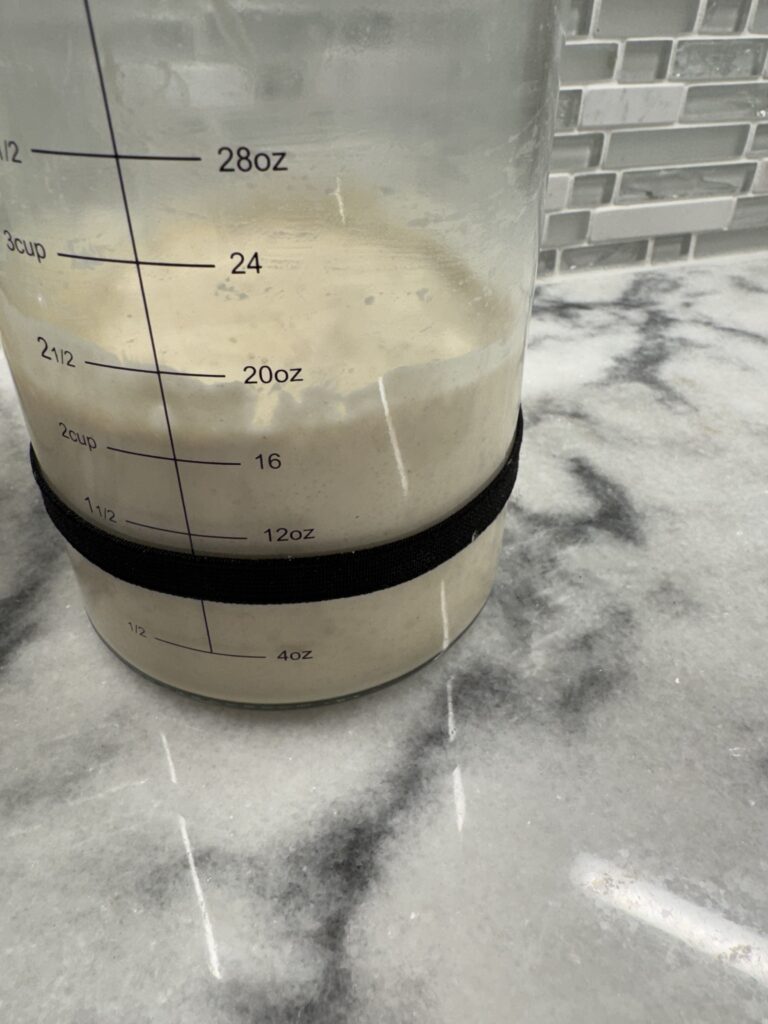
I was very excited to start the “Sourdough” process, that I even bought special jars with measurements on them, but honestly, a good old fashioned mason jar works just as well. I did have a food scale, which I used in the beginning for the starter, but ended up eyeballing how I fed it as time went on. Everyone has their own opinion on that, but I really think that you have to do what works for you.
One mistake I made early on, and will not do it again, was that I named my starter. I named her Gertie, or Gertrude, depending on how she was behaving. And let me explain why I regretted naming it. You have to “feed” your starters daily, and all that is, is adding more flour and water. But in order to feed it and keep it in the same jar, or new similar sized one, because usually you aren’t baking daily, you have to do what is called “discard” Yes, you have to discard a portion of your starter every day. Here comes the delema … you’ve worked so hard, monitored it, tended to it, you showed it all the love. You keep it comfy cozy in a warm, but not too warm area of your kitchen, only to have to rip some out, and yes … discard it. If you just can’t bear to throw it into the trash, then you can bake with it, but that would mean that you’d be baking every day. Or you could put it into another jar and stick it in the refrigerator. Now if you do this every day, like you’re supposed to … you’ll end up having a refrigerator full of “sourdough discard” and no place to keep your milk and eggs. Or, you go onto Pinterest and find all the “sourdough starter” recipes that you can, and start baking, even though you don’t feel like baking, but you have to, because you have such an abundant amount of discard, which I did and still do. So it comes down to “How can I just gonna throw part of Gertie in the trash??” And that is why I decided no more naming my starters … I had to keep reminding myself that it is just flour and water. It’s just flour and water …
So “feeding” is mostly done in ratios, and if you do any research, you’ll find that everyone has their preferred ratio, and will tell you why theirs is best. For example, lets use a 1:1:1 ration, which is: same part starter, same part water and same part flour, And that will vary depending on how many loaves you’ll be baking and how often. Also, how thick you prefer your starter, I preferred a thicker starter and honestly, after a while, I would just discard some and add flour and water and mixed the starter until I was happy with the consistency.
It takes about a week for you to be able to start using your starter. And the way to tell, is if it has grown, or “peaked”, (that is why you put a rubber band around your jar). You put it to the level of your starter after you feed it, and when it grows, time depending on the temperature in your kitchen, and gets bubbly and airy, and smells sourydoughyyeasty … she’s ready! But maybe you aren’t, so you discard … See the emotional rollercoaster?
I have to admit, I did’t fully wait until Gertie was ready, and I baked a loaf. Even though it wasn’t ready, I was soooo excited to be baking my very own homemade sourdough. It was dense, and the crumb wasn’t consistent, but I did it! It was such an accomplished feeling!
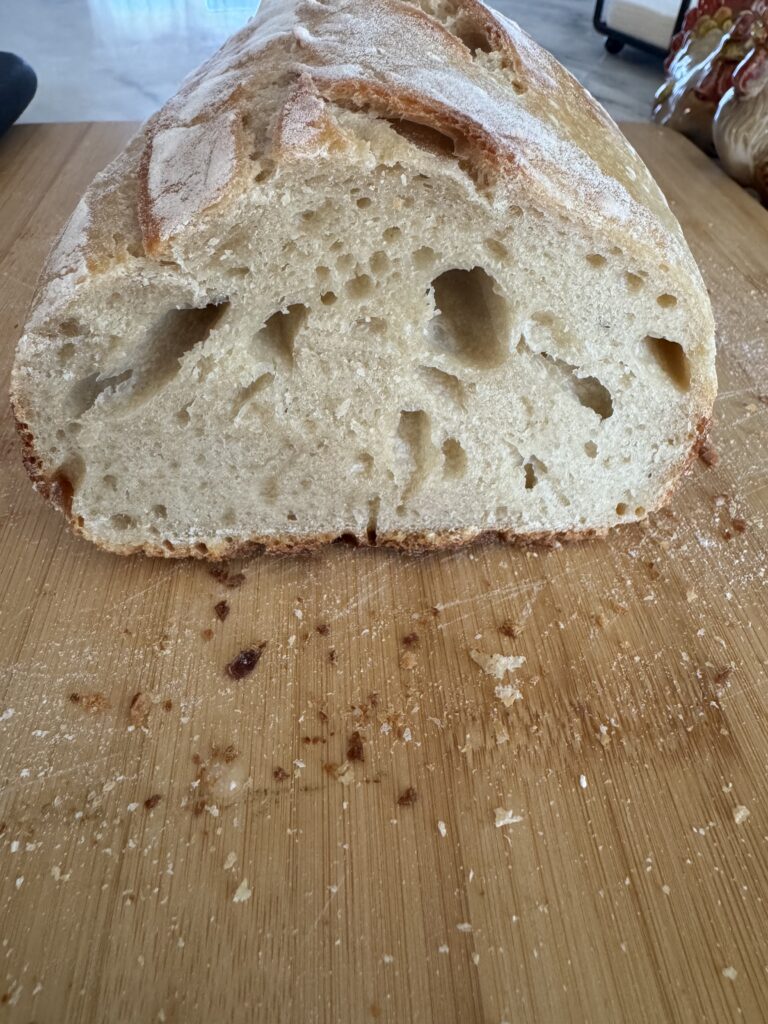
It took a little trial and error, and I watched thousands of YouTube videos and Facebook reels trying to perfect the perfect starter. I even ended up buying more equipment, like a banneton proofing basket, a danish wisk, a scoring lame and a silicon spurtle. Now I felt like I knew what I was doing. And once I got my starter under control, I started baking really good sourdough loaves! I was even thinking about starting a Cottage Bakery …
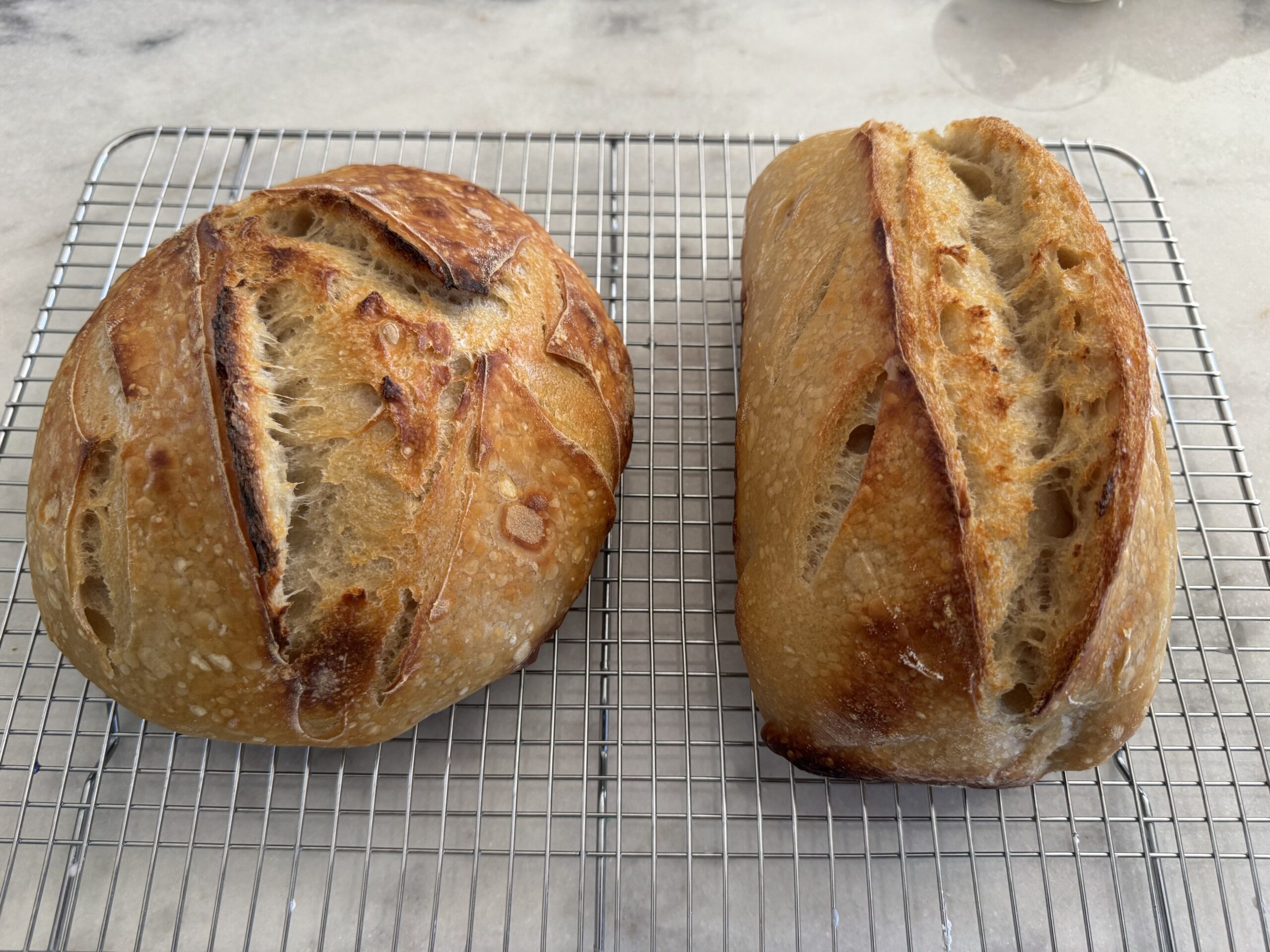
So my loaves got better and better, and I started baking more and more, One thing that is surprising, especially if you are used to store bought processed bread, is that it does’t last long. And I don’t only mean because it’s so good, that it is devoured before the loaf is able to fully cool … but it does’t stay fresh for long. That is why finding a good storage box that can sit on the counter is important. Another trick is to bake 2 loaves (or more) and slice and throw a loaf or two in the freezer. You can pop the sliced bread into a toaster and it is as yummy as if it just came out of the oven.
So if you’re considering starting your own Sourdough Journey, and are feeling intimidated and overwhelmed, I say, Go For It!! It will be such a rewarding experience, and you will save tons of money since you won’t be buying loaf after loaf from the supermarket every week. And don’t get frustrated, it’s a learning curve. And remember … it’s just flour and water.